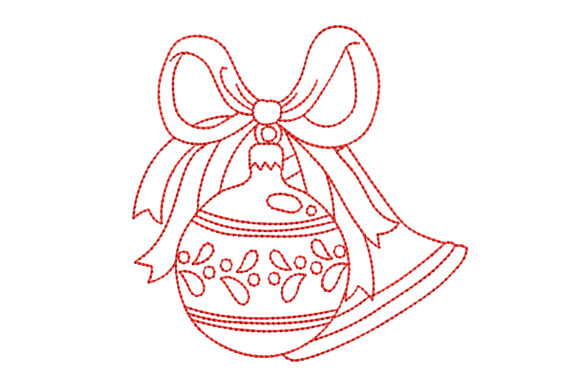
Review: Redwork Christmas Ornament and Bell Design
As a designer who spends more time at the hoop than away from it, I approach every new machine embroidery design with a critical eye. It is not just about whether the image looks cute on a screen; it is about how those digital vectors translate into thread on fabric. Recently, I evaluated the Redwork Christmas Ornament and Bell specifically for its potential in real-world production environments. This isn't a fluffy review filled with hype; this is a practical assessment of how this specific embroidery file holds up when you are trying to build a cohesive holiday collection for your small shop or create meaningful personalized gifts.
The Aesthetic Appeal of Classic Redwork
The first thing that strikes me about the Redwork Christmas Ornament and Bell is its commitment to tradition. In an era where designs often rely on heavy fill stitches and complex shading, there is something refreshing about the simplicity of redwork. This design utilizes a single color palette, typically relying on a classic crimson or brick red against a neutral background. The mood it creates is instantly nostalgic, evoking the feeling of vintage holiday linens and hand-stitched heirlooms.
Visually, the layout balances two iconic symbols: the spherical ornament and the ringing bell. The line work appears clean, suggesting a reliance on running stitch techniques that define the redwork style. For a designer, this is crucial. Heavy satin stitch or dense fill stitch areas can sometimes overwhelm delicate fabrics, but the open nature of this design allows the texture of the material to shine through. It feels less like a sticker slapped onto a garment and more like an integral part of the textile itself. This visual personality makes it incredibly versatile, fitting naturally into projects that aim for a rustic, farmhouse, or heritage aesthetic.
Real-World Application: The Holiday Tote Scenario
To truly understand the value of this design, I imagined a specific client scenario. Picture a local boutique owner preparing for the December rush. They need a handmade product that sells quickly but doesn't take hours to stitch. They decide on a canvas tote bag design featuring the Redwork Christmas Ornament and Bell.
In this context, the design shines. Because the hoop size is listed as 4x4, it fits perfectly on the lower corner of a tote or centered on a tea towel without requiring a massive frame change. The stitching clarity is high; even from a distance, the silhouette of the bell and ornament is recognizable. For an Etsy seller, this translates to excellent photography potential. The high contrast between the red thread and a natural cream canvas creates a striking printable mockup that stops the scroll on social media.
Furthermore, consider the durability aspect. A tote bag gets thrown around. Designs with thousands of stitches can pucker or wear down over time. However, a redwork-style design typically has lower stitch density. This means the finished product remains flexible and soft, which is a huge selling point for customers who want their custom apparel or accessories to feel comfortable, not stiff.
Fabric Compatibility and Technical Considerations
While the design is robust, it is not without its technical nuances. As a professional, I must advise caution regarding fabric selection. The beauty of redwork relies heavily on contrast. If you attempt to stitch the Redwork Christmas Ornament and Bell on a dark fabric using red thread, you will lose all definition. This design demands light-colored backgrounds—think white, cream, oatmeal, or very pale pastels.
Additionally, because the design likely utilizes fine lines to achieve its detailed look, fabric texture matters immensely. On a highly textured waffle weave or a loose-knit sweater, those fine lines might get lost or appear jagged. For sweatshirt embroidery, I would recommend using a high-quality cutaway stabilizer to prevent the fabric from pulling the stitches out of alignment. If you are working with stretchy fabrics for baby embroidery items like onesies, a water-soluble topper is essential to keep the needle from sinking into the pile and distorting the shape of the bell.
One area to watch closely is the curvature of the objects within the design. If the digitizing is poor, circular elements like the ornament can look polygonal or "stepped." Before committing to a large batch of commercial embroidery projects, always run a test stitch-out on scrap fabric similar to your final material. Check the corners of the bell and the top loop of the ornament. These are high-stress points where thread breaks or bird-nesting can occur if the tension isn't dialed in correctly.
Commercial Viability and Brand Consistency
For creative entrepreneurs and digital product sellers, consistency is key to building trust. The Redwork Christmas Ornament and Bell offers a level of professionalism that generic clip-art conversions often lack. When a customer receives a personalized gift with crisp, intentional stitching, it reinforces the perceived value of your brand.
This design works exceptionally well as part of a series. Imagine pairing it with other redwork motifs—a stocking, a tree, or a candy cane—to create a coordinated set of kitchen towels or napkins. This approach increases the average order value for your small shop product listings. It also serves as an excellent design asset for limited-edition runs. Because it is timeless rather than trendy, you can potentially re-introduce this design in your catalog year after year without it looking dated.
However, a word of warning on licensing: always verify the terms attached to the digital embroidery file. Some designers allow unlimited physical sales but restrict the resale of the file itself or the use of the design on certain types of mass-produced goods. Ensure you are compliant before listing your finished product on marketplaces.
Final Verdict for the Practical Maker
The Redwork Christmas Ornament and Bell is a solid addition to any holiday library. It respects the limitations of the 4x4 hoop while maximizing visual impact. It is not a design that tries to do too much; instead, it executes a classic concept with clarity and style.
My recommendation is to embrace its simplicity. Do not try to over-complicate it with excessive thread colors or bulky backing materials. Let the red thread speak against the neutral fabric. Whether you are stitching a single embroidered patch for a jacket or producing fifty units for a craft fair, this design delivers a professional result that resonates with the warmth of the season. Just remember to test your tension, choose your stabilizer wisely, and ensure your fabric provides the necessary contrast. When executed with care, this design becomes more than just decoration; it becomes a cherished part of someone's holiday tradition.